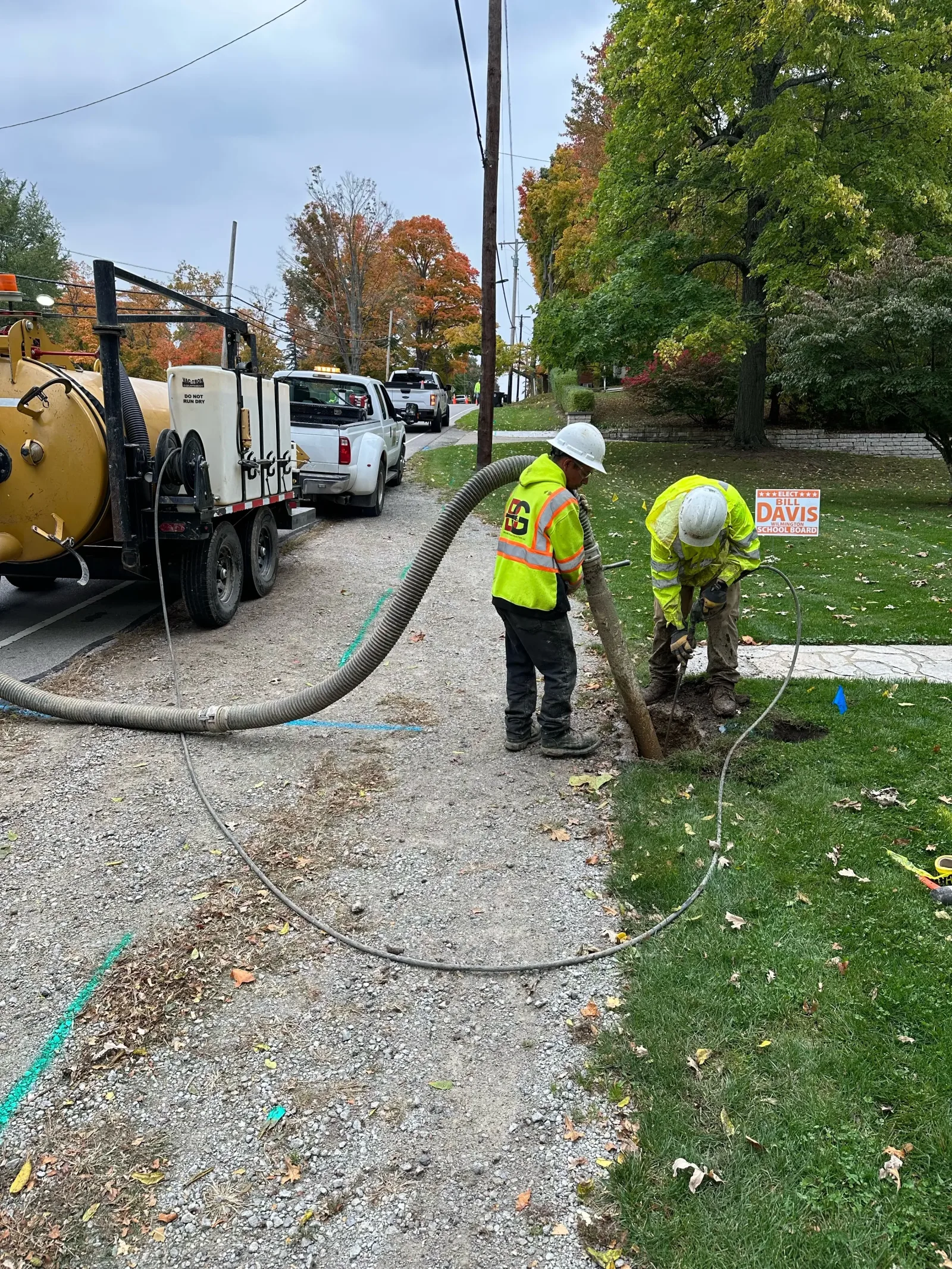
When you need to dig around something you absolutely cannot afford to hit — a live gas main, an electrical duct bank, a fiber trunk line — a backhoe is the wrong tool. Hydro excavation is the right one. It uses high-pressure water to loosen the soil and a powerful vacuum to lift the slurry into a tank on the truck, so we uncover what's underground without a blade ever touching it. B&G runs hydrovac across the Tri-State for exactly these moments: when precision and safety matter more than raw speed.
The process is simple in principle and surprisingly precise in practice. A pressurized water lance cuts and liquefies the soil at the spot we're working, turning dirt into slurry. At the same time, a high-flow vacuum hose pulls that slurry up and stores it in the truck's debris tank for clean disposal off-site. Because the operator controls exactly where the water and suction go, we can open a tight, accurate hole right down to a buried line without the guesswork — and without the risk — of swinging a steel bucket through unknown ground.
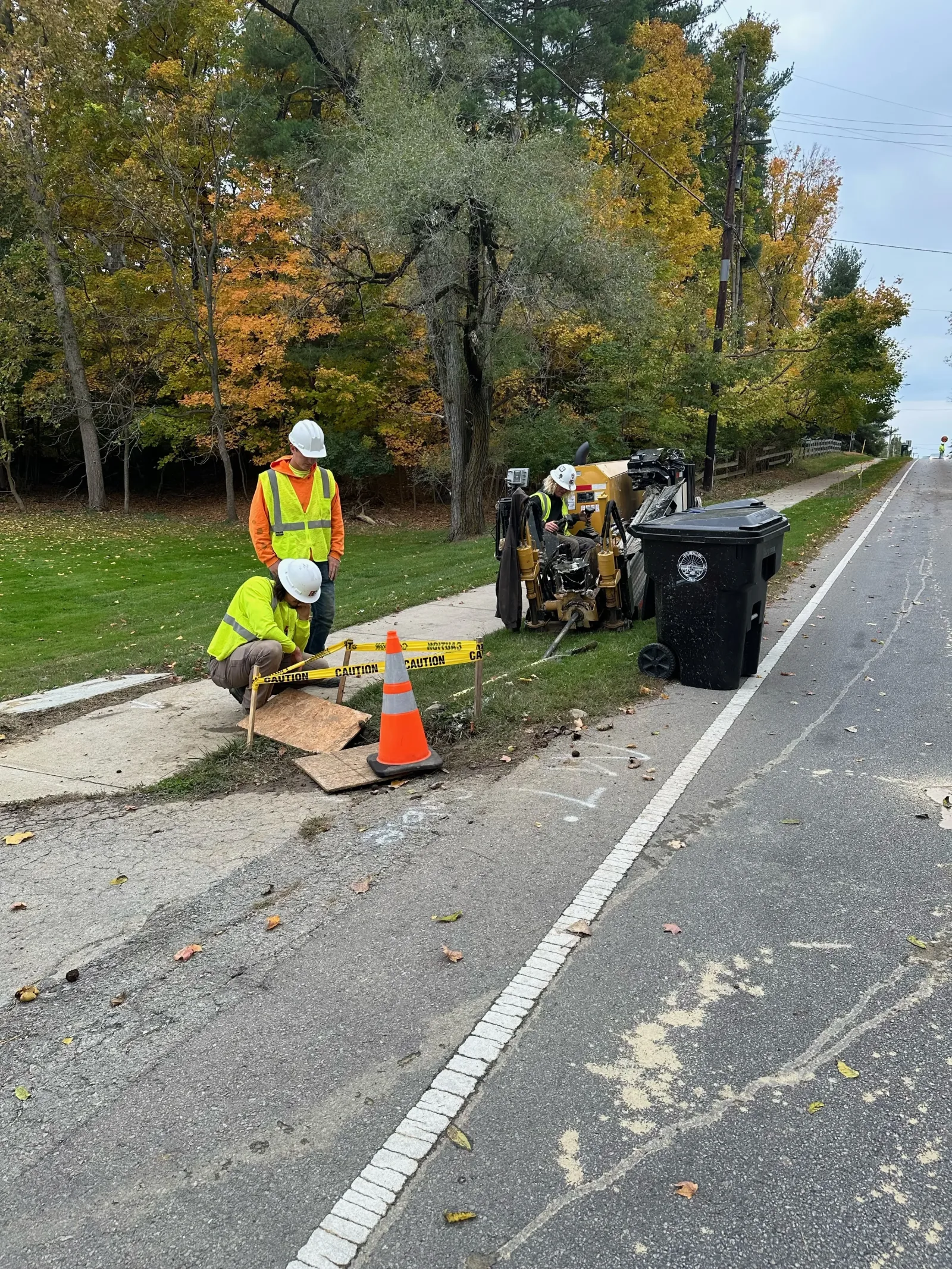
That same control is what makes hydrovac so useful as the first step on a directional drilling job. Before we bore, we hydro-excavate to daylight — physically expose — the existing utilities along the path so the bore plan is built around what's actually there, not what a locate map guesses. It's a non-destructive way to verify depth and position before the drill ever turns.
Hydro excavation covers a lot of ground on an underground job. The most common call is potholing (also called daylighting): digging a clean test hole to confirm the exact depth and location of a buried utility. We also use it for slot trenching — narrow, precise trenches for new service lines that don't justify a full open cut — and for any excavation that has to happen tight against sensitive infrastructure. Anywhere a conventional dig would put a pipe, cable, or duct at risk, hydrovac does the work without the damage.
The cost of a struck utility is never just the repair. A nicked gas line is an evacuation and an emergency response; a severed fiber run is thousands of customers offline and a furious carrier; a damaged electric duct is a safety incident waiting to happen. Conventional excavation near congested utilities is a gamble, and the more lines that share a corridor, the worse the odds. Hydro excavation takes the gamble out — there's no hard tool to shear a pipe, only water and suction, both controlled by an operator who can see exactly where the hole is going. It's slower than a backhoe by design, and that's the point: you trade a little speed for the certainty that nothing underground gets hit.
It also stays useful when the weather turns. Hydrovac trucks can run heated water, which cuts through frost and frozen ground that would stall conventional digging through a Tri-State winter. Whether you need a single pothole to verify a depth or a full slot-trench run alongside live infrastructure, B&G brings the truck, the crew, and the judgment to do it safely. Tell us what's in the ground and we'll plan the dig around it.
Hydro excavation uses pressurized water to break up soil and a powerful vacuum to lift the resulting slurry into a debris tank on the truck. There's no blade or bucket cutting blindly through the ground, so it's the safest way to dig around existing utilities. It's also called vacuum excavation, hydrovac, or daylighting.
Because water and suction can't shear a pipe or cable the way a steel bucket or trencher can. When you have to expose a live gas main, an electrical duct bank, or a fiber run, hydro excavation lets us uncover it precisely without striking it — protecting your crew, the utility, and the surrounding service.
Yes. Hydrovac trucks can run heated water, which actually makes them effective at cutting through frost and frozen ground that would stop or slow conventional digging. It's one of the reasons hydro excavation stays useful through Tri-State winters.
Trenchless boring for fiber, gas, water & conduit.
Fiber, water, sewer & electrical conduit installed to code.
Trenching, grading & site prep around existing utilities.
Tell us what's in the ground and we'll plan the dig.
Get a free, no-obligation quote on safe, non-destructive hydro excavation from the Tri-State's underground experts.
Get a Free QuoteTell us about your project — location, type of utility, and timeline — and we'll get right back to you. No obligation.